
Wrexham Didn’t Go Global. It Got Distributed.
The story behind football's most unlikely global brand.

There is one number that perhaps explains Wrexham better than all the goals, promotions, red shirts and Hollywood smiles combined.
£1.48 million.
That was the club's revenue in the 2020/21 season, just before Ryan Reynolds and Rob McElhenney took control.
Five years later, in the financial year ending 30 June 2025, Wrexham generated £33.3 million in revenue. More than half of it, 57.7 per cent, to be precise, came from outside the United Kingdom. Almost £17.3 million came from sponsorship and advertising alone. That means its most valuable asset may no longer be what happens inside the stadium, but the attention that exists around it.
That is the moment when this story stops being just a charming Hollywood anecdote.

Because Wrexham did not simply buy better players. It did not merely find wealthier owners. It did not just win enough games to climb through the English football pyramid. Wrexham found a way to transcend the limits of its own distribution. And perhaps that is the most important thing that has ever happened to the club.
Football clubs have spent decades living within a fairly clear geography. You have a city. You have a stadium. You have supporters. You have a league. And then, depending on your size and success, that circle expands.
Manchester United became global because it spent decades winning in front of a global television audience. Real Madrid exported its identity through European trophies. Barcelona gave an entire era of football a style that became a universal language.
First comes football. Then comes the audience. Then comes the money. Wrexham, however, did something almost in reverse. First came the story. Then came the audience. Only then did the club begin to look like something that had always been destined for a global market.That is an important distinction.
Because Ryan Reynolds and Rob McElhenney did not offer the world Wrexham as just another football club. The world already had enough football clubs. They offered it Wrexham as a narrative. As a place. As a community. As a group of people worth getting to know. As a story that, perhaps most importantly, did not begin with the need to understand the offside rule. And that is where the real transformation began.
O4 BRIEF
WHAT HAPPENED?
Wrexham transformed from a small Welsh football club generating £1.48 million in revenue in 2020/21 into a £33.3 million business by 2024/25. More than half of that revenue came from outside the UK, while sponsorship and advertising alone generated £17.3 million. The club's global reach was accelerated by the Hollywood ownership of Ryan Reynolds and Rob McElhenney and, above all, by Welcome to Wrexham, a documentary that turned the club's story into its most powerful distribution channel.
WHY DOES IT MATTER?
Wrexham shows that a football club can build a global audience before it becomes a global sporting power. The documentary did not directly pay the club, but it introduced Wrexham to people who had no previous connection to the club, creating attention that could later be converted into sponsorship, merchandise, tourism and international supporters. The result is a different commercial model: the club is no longer selling only access to football, but access to a story people already care about.
THE BIGGER QUESTION
What happens when a football club is no longer limited by the number of people who can fit inside its stadium or live in its city? Wrexham suggests that the modern club can become a media platform, distributing its identity, community and stories around the world before its sporting success catches up. The challenge is turning that attention into something sustainable after the novelty inevitably fades.
SOURCES
The Story Became the Distribution
Technically, Welcome to Wrexham is not one of Wrexham's business products.
According to the club's own financial accounts, Wrexham does not receive direct revenue from the documentary series. That is an almost comically important detail. The most powerful marketing machine in the club's history does not directly pay the club for what it does. But perhaps that is precisely why it is wrong to see the series simply as a television product.
Welcome to Wrexham is not a product Wrexham sells. It is the channel through which Wrexham was distributed to the world. And once you understand that, everything else begins to look different.
The documentary took the club to an audience it could never have reached on its own, within its natural football ecosystem. The series became the most-watched documentary series in FX Entertainment history, with an audience extending far beyond the boundaries of traditional football fandom.

That means someone in America could discover Wrexham before watching a single one of its matches. Someone could know who Paul Mullin was before knowing which league Wrexham played in. Someone could buy the shirt of a club from North Wales before ever hearing of its local rival. In the traditional football model, that would have been almost impossible. But television does not necessarily ask for a league table. It asks for a reason to stay. And Wrexham had one.
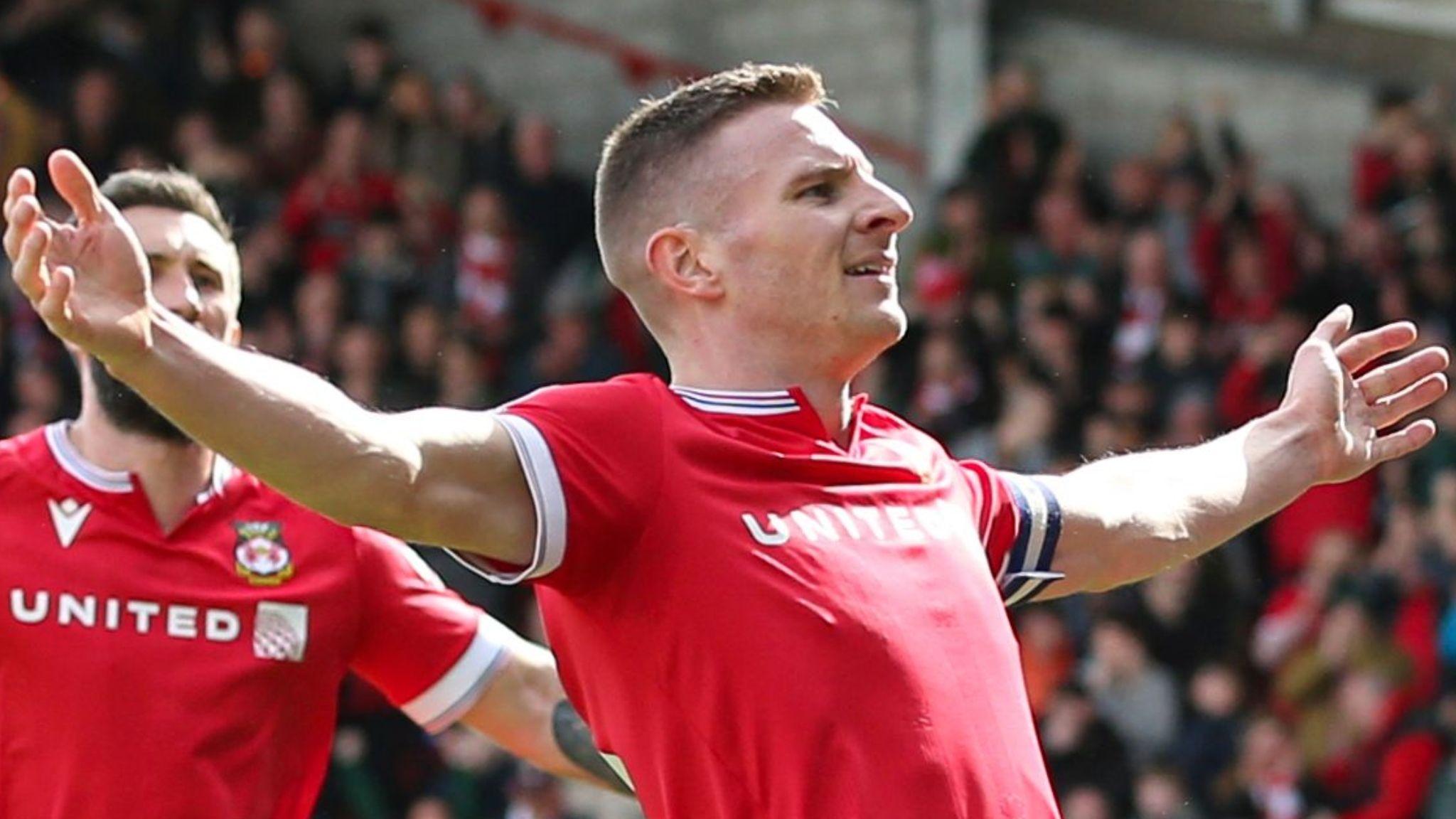
Perhaps most importantly, Reynolds and McElhenney, despite being the perfect bait for the first click, were not the reason people stayed. Hollywood can attract attention. It cannot hold it indefinitely.
What made the series successful was something much older than Hollywood: the human need to become attached to a story whose ending is unknown. A town that had seen better days. A club trapped on the margins for too long. People who had spent their entire lives working for it. Supporters for whom the result was not entertainment, but the mood of the entire week.
And two men who entered that world from the outside, enough of outsiders to look at it with wonder, but smart enough to understand that its greatest value did not lie in turning it into something else. It lay in showing it to the world.
The BBC, in its analysis of the show's success, recognised exactly that: celebrity owners may have explained the initial interest, but audiences stayed because they developed an emotional connection with the people and the community of Wrexham.
That may be the hardest thing to explain to all the clubs desperately trying to “produce content” today. People do not want content. People want a reason to care. Those are not the same thing.
American SToK coffee is not available in UK
Perhaps the clearest sign that Wrexham's market is no longer Wales came when an American coffee brand bought the naming rights to its stadium, despite not selling its product in the country where the stadium stands. SToK Cold Brew was not buying access to Wrexham. It was buying access to the audience Wrexham had already exported.
But then there is another kind of stadium. One without stands. One that is not located in Wales. And one that, perhaps most importantly, does not cease to exist when the match is over. Wrexham understood that a modern football club no longer has just a stadium. It also has the distribution infrastructure of its own story.
Today, what matters is not only how many people you can bring into the stadium. Sometimes, it matters more how many people you can bring into your world. That is a significant shift.

For a long time, football believed that globalisation was something reserved for the biggest clubs. You had to be in the Premier League. You had to play in the Champions League. You had to have Messi, Ronaldo, Neymar, or a history so large that people in other countries inherited it almost like a family name.
Wrexham demonstrated something else.
You can have a story, and if you tell it well enough, it can cross borders your team has not yet crossed. The numbers reflect that. In its most recently published accounts, the club generated £19.24 million in revenue from the rest of the world, compared with £13.51 million from the United Kingdom.
In other words, Wrexham is a club from Wales that now earns most of its money from outside the place where it plays. Ten years ago, that sentence might have sounded like an error in an Excel spreadsheet. Today, it is a business model.
A Sponsor Does Not Just Buy Space on a Shirt
Perhaps the most interesting part of the entire story is not the growth in revenue. A wealthy owner can buy conditions for revenue growth. Promotion can produce it. One good season can create it, at least temporarily. But the structure of revenue says something deeper.
In 2024/25, Wrexham generated £17.3 million from sponsorship and advertising, more than from any other individual source of income, and more than half of its total turnover.
Why?
Because a sponsor today is not simply buying a piece of fabric on a player's chest. It is buying an audience. It is buying context. It is buying the opportunity to exist inside a story. That may be Wrexham's most important business lesson.
Football clubs traditionally sell marketing inventory: stadium naming rights, a shirt sleeve, LED boards minutes, a VIP box. Wrexham, however, can sell something far more abstract and, for that very reason, far more valuable: global attention with an emotional context.
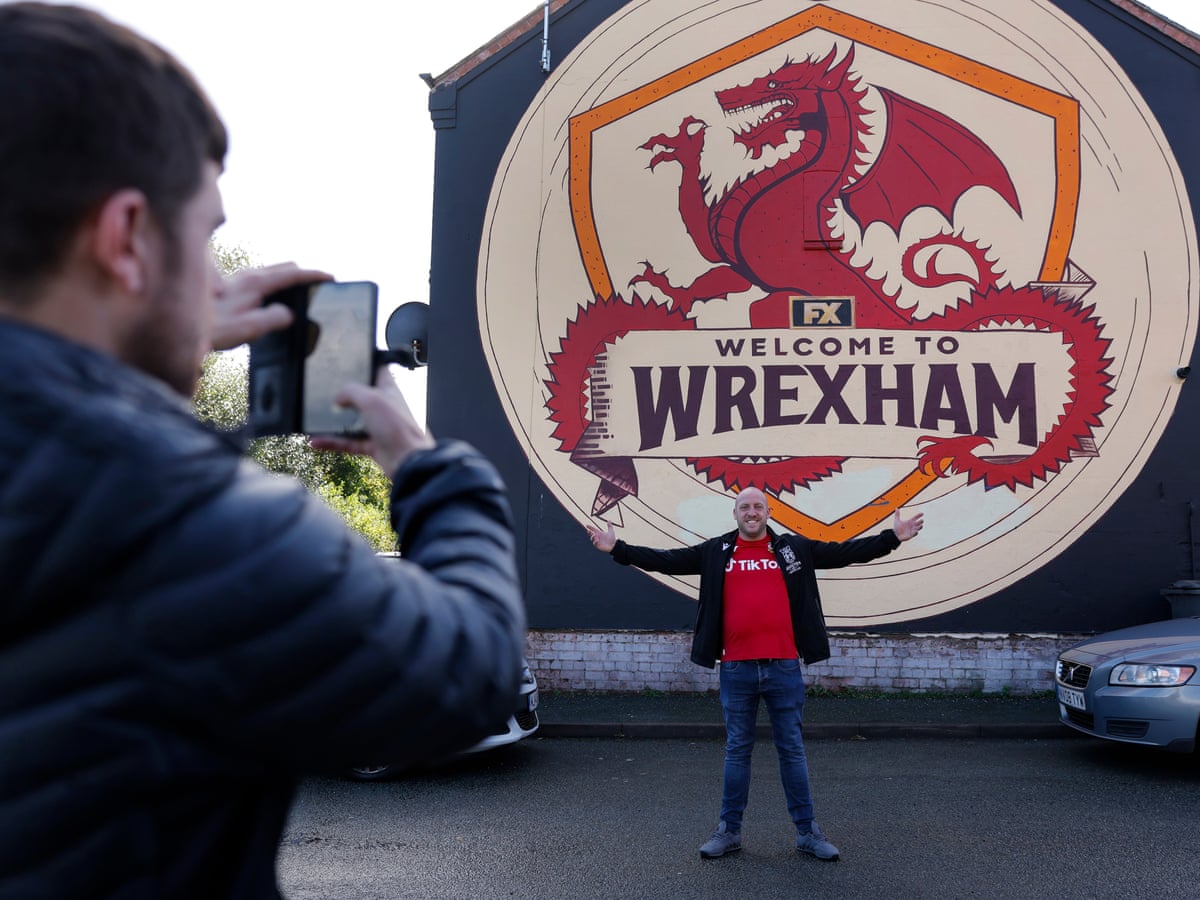
Because the viewer of a documentary does not just see a logo. They see the town. They see the match. They see the owners. They see the club employee. They see the supporter who cares perhaps too much. The brand does not appear in the middle of a broadcast like a commercial interruption. It appears inside a world the audience already wants to remain in. That is an enormous difference between advertising and belonging.
But What Happens When You Lose?
This is where the whole story becomes even more interesting. Because football is obsessed with winning. Everything is subordinate to the result. You win - you grow. You lose - you decline. The league table is, in that sense, a brutally simple form of storytelling. In the end, there is only one answer.
But stories do not work like that. A story needs a problem. In fact, a story without a problem is not a story. It is a report. And Wrexham was fortunate that its story was not perfect.
In the first season of the documentary, the club failed to win promotion. By every rule of football business, that was a failure. But by the rules of drama? Perhaps the perfect ending to a first season. Because now you have to come back. You have to see what happens next.
Humphrey Ker, the show's executive producer and a director of the club, described precisely that adversity as an important part of what makes television interesting: failure and hardship create a reason for the story to continue.
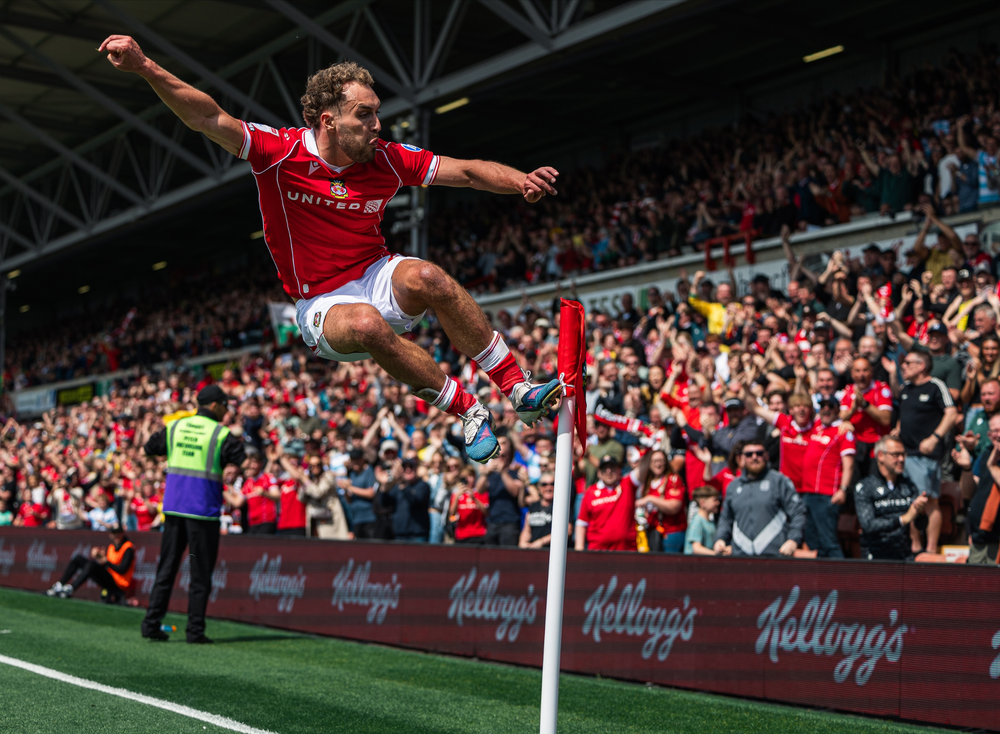
And here we encounter perhaps the most interesting paradox of the entire Wrexham experiment:
For a football club, defeat is usually bad business. For a story, defeat can be the beginning of the next season. That does not mean, of course, that the club wants to lose. But it does mean that its value is no longer entirely dependent on a perfect result. And that is an enormous change.
If your entire economy depends on winning, every match is a business risk. But if you have a story people remain interested in even when you lose, then you have found something rare in football: a way for defeat not to mean the end of attention - and perhaps not even the end of value.
Wrexham Did Not Just Climb
Today, it is easy to look back and turn the whole thing into a simple formula. Hollywood owners bought a small club. They invested money. They made a series. The club started winning promotion. The end.
But that explanation misses the most interesting part. Money is not enough. If it were, football would be full of Wrexhams. A celebrity owner is not enough either.If it were, every famous person who bought a club would automatically acquire a global audience. Not even a documentary is enough. There are plenty of football documentaries.
Wrexham's real success lay in bringing together several things that rarely come together at the right moment: a genuine local community, enough drama, unusual owners, sporting uncertainty and, above all, the ability to avoid treating any of it as marketing.
Marketing usually begins with the question: How do we explain to people why we are interesting? Wrexham did something smarter. It allowed people to discover that for themselves. And that is an enormous difference.

Nobody wants to watch an advertisement telling them how authentic a football club is. But they might watch an authentic person and decide for themselves that they care. Nobody wants a club to explain how important its town is.
But if they see the people from that town, their habits, their defeats, their small rituals and their excessive emotional attachment to eleven players in red shirts, they may eventually want to become part of it themselves.
And that is what Wrexham sold to the world. Not football. Not Hollywood. Not promotion alone. But belonging to a story that was already in progress.
The Club That Got Distributed
Perhaps, then, the most accurate thing to say about Wrexham is not that it became a global club. That is the consequence. The real question is how.And the answer may lie in one simple reversal of the usual order.
The traditional football model looks like this:
Club → Results → Fans → Sponsors → Money.
Wrexham's model looked different:
Story → Audience → Belonging → Commercial Value → A Better Club.
Of course, results still matter. In the end, Wrexham had to win. Three consecutive promotions did not happen in the documentary's editing room.
But perhaps the most important thing is that the club won global attention before it won a place among football's elite. Perhaps that is why Wrexham's greatest innovation was not really about football at all.
They did not bring Hollywood into football. Hollywood already knew how to create spectacle. They did not even invent the sports documentary. What they did was something simpler and, for that very reason, much harder to replicate.
They understood that a football club in the 21st century is no longer simply an institution that plays matches. It can be a medium. It can be a series. It can be a world that people enter through human beings rather than results. And it can become global long before it becomes truly big.
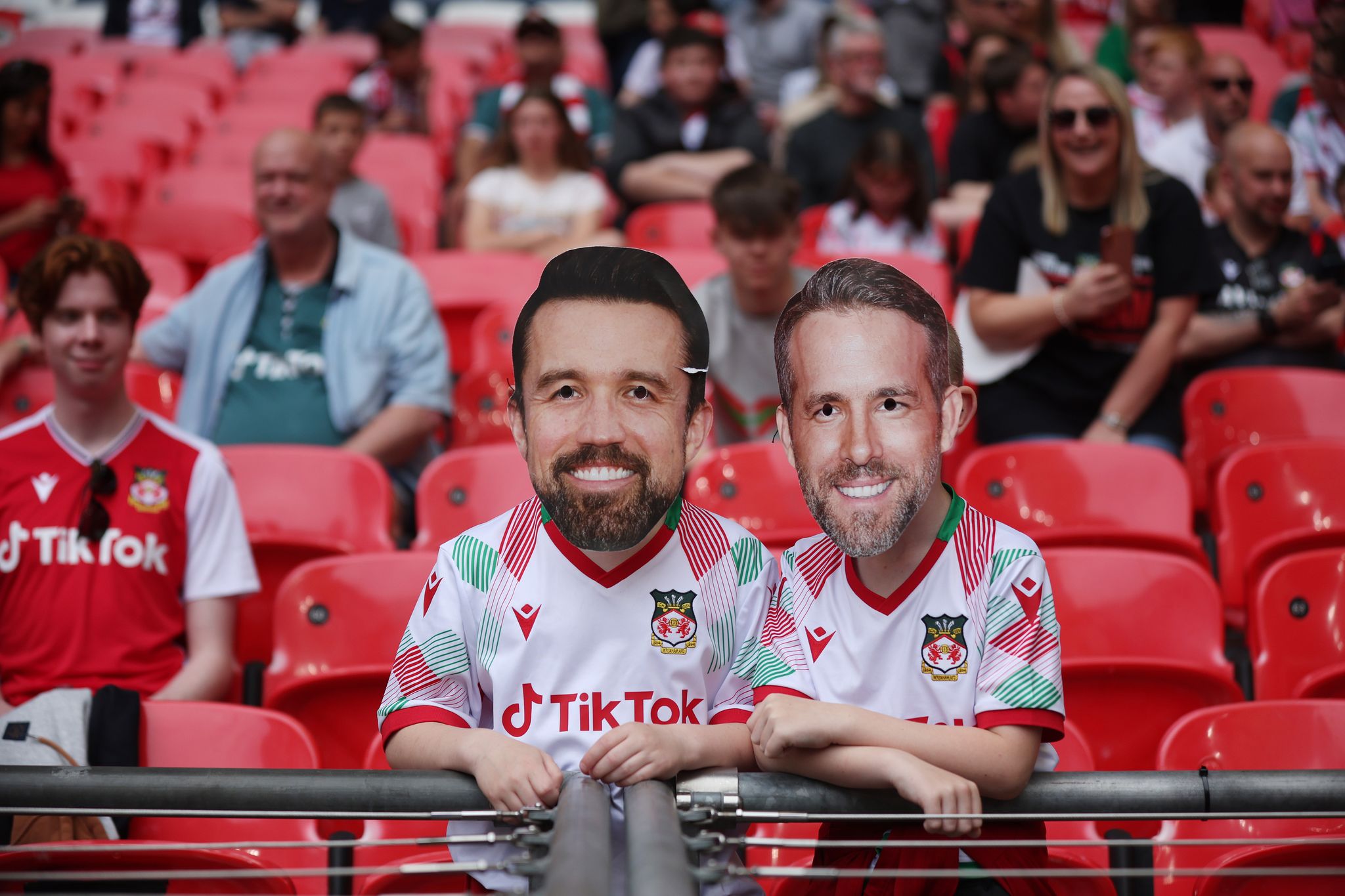
Perhaps that is why the most interesting question Wrexham leaves behind is one that reaches far beyond a single football club in North Wales. What happens to a football club when it is no longer limited by the number of people who fit inside its stadium, the town it comes from, or the league it currently plays in? What happens when its story begins travelling ahead of its results? Wrexham is still searching for the answer, and perhaps it will not find it on the pitch alone.
But one thing is already clear: in modern football, the path to becoming global no longer has to go through becoming big first. Sometimes, it begins much earlier, at the moment you manage to convince someone, somewhere far away from your stadium, to care.

