
The long way home
How Ignazio Cipriani spent 24 years away from Ravenna, and then came back with Ronaldinho

There are transfers that can be explained by money, and there are transfers that can be explained by football. Then there are those rare, almost uncomfortably romantic transfers which, if you look at them long enough, reveal themselves as something else entirely: biographies. Returns. Attempts by a man who has travelled far enough to find his way back to where he started.
At first glance, Ronaldinho at Ravenna belongs to that category of football stories that seem to exhaust themselves in the headline:
Ronaldinho, 46, signs for an Italian third-tier club.
It has everything modern football loves: an absurdity big enough to become news, a name big enough for the algorithm to recognise, and enough nostalgia to take us all, if only for a moment, back to a time when Ronaldinho played football as if he had discovered a secret nobody else knew.
But the longer you look at this story, the less it seems to be about Ronaldinho. Because Ronaldinho may be the brightest object in the room, but he is not necessarily its architect.
The architect is Ignazio Cipriani. And perhaps, in the end, the whole thing is simpler than it seems.
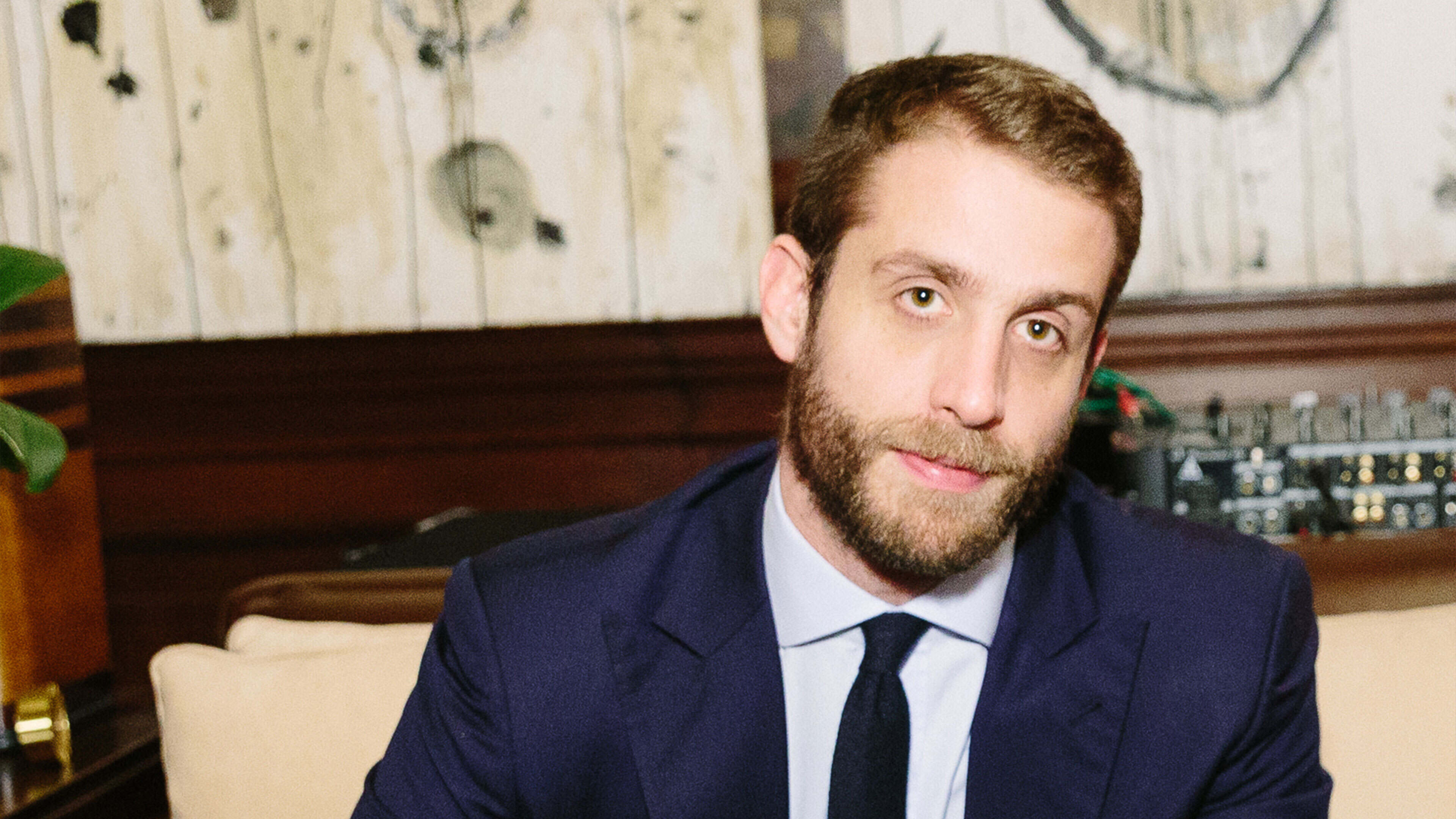
A boy from Ravenna grew up watching Ronaldinho. Then he left and spent twenty-four years in America. He built a life far from the city where he was born. He came back, bought his hometown football club, and then brought in the man who had once been his idol. In a world where sport constantly tries to appear bigger than life itself, this is, in fact, a very human story. A man travelled far. And then he tried to come home.
O4 BRIEF
WHAT HAPPENED?
Ignazio Cipriani returned to his hometown of Ravenna after more than two decades in the United States and turned that return into a football project. After acquiring Ravenna FC in 2024 and later bringing Black Duck in as an equal partner, he built a structure around the club that combines Ariedo Braida's football expertise, technology and data-driven thinking. In 2026, Cipriani brought his childhood idol Ronaldinho into the project as both a shareholder and potential player.
WHY DOES IT MATTER?
Ravenna's story shows how a small football club can become a cultural project rather than simply a sporting investment. Ronaldinho brings global attention, Braida brings decades of football knowledge, Black Duck represents technology and structure, while Ravenna provides the local identity that connects everything. The club is no longer selling only football — it is selling a story about home, memory and possibility.
THE BIGGER QUESTION
Can a football club turn a personal story into a sustainable system? Ravenna is attempting to connect four very different forces: Braida for knowledge, Black Duck for technology, Ronaldinho for imagination, and Ravenna itself for purpose. The real test will be whether the story can become something that lasts beyond the headlines.
SOURCES
A CITY THAT WAS NEVER ON THE FOOTBALL MAP
Ravenna is not Milan. It is not Turin or Rome. It is not even a city the average football fan would instinctively place on Italy's mental football map.
Ravenna has eight UNESCO World Heritage Sites, centuries of history, basilicas and mosaics that have outlived empires. A city that was once the capital of the Western Roman Empire is today known for things that have little to do with what happens on a football pitch at the weekend.
And that is precisely why Ignazio Cipriani's footballing ambition is so interesting.
Because, as far as publicly available information suggests, he had not built a football empire before Ravenna. He had not been collecting clubs across Europe. Ravenna was not another asset in an investment portfolio, somewhere between a Belgian second-division side and a Portuguese academy.
24 YEARS TO RETURN TO THE BEGINNING
Cipriani spent more than two decades in the United States, somewhere between the Italy he had left behind and a world which, thanks to his family's story, had long since grown far beyond the boundaries of a single city.
The Cipriani name is no ordinary name in Italian business mythology. The family story leads back to Venice's Harry's Bar, to luxury hospitality, hotels and restaurants, to a world in which Italian identity is sold not simply as geography, but as an experience. And Ignazio Cipriani belongs precisely to that generation: local by origin, global by life.

Perhaps that is why his return could never look like the return of a man who simply wanted to buy a football club and wait for results. His idea seemed different from the beginning. To return home, but bring the world with him. When he entered the club in 2024, Ravenna were playing in Serie D. It was his first publicly known move into football club ownership. And it was the club of his hometown, which changes everything.
Because there is a difference between buying a football club and buying back your own past. Cipriani did not find Ravenna on a map of investment opportunities. He had been born there. And that is where the story becomes more interesting.
Cipriani initially bought the club in 2024, but Ravenna did not remain a one-man project for long. A few months later, London-based investment partner Black Duck AI acquired 50 percent of Ravenna FC Holding, the company controlling the club. Cipriani and Black Duck thus became equal partners in a project conceived from the very beginning as something more than an ordinary change of ownership.
That may have been the moment Ravenna stopped being merely a sentimental story about coming home. Because Cipriani had not brought money alone. He had brought a structure.
On one side, Ariedo Braida, a man whose name is tied to one of AC Milan's greatest eras and to a kind of football that still believed in the human eye, instinct, experience, and the almost mystical ability to recognise talent before numbers could explain it.
On the other, Black Duck and the idea that technology, data and artificial intelligence could become part of the way a small club thinks about its future.
Between them stands Cipriani, trying to connect two eras: The football that remembers, and the football that is yet to come.
That may be Ravenna's real ambition. Not simply to climb from one division to another. But to prove that a small club can be built simultaneously on the experience of a man like Braida and on the technology that promises to change the way football finds, evaluates and understands players. One foot in the past. The other in the future. And somewhere in between, the city of Ravenna.
THE BOY AND HIS IDOL
There is one thing Cipriani said about Ronaldinho that changes the perspective of the entire story. Ronaldinho, he said, inspired him and his entire generation to fall in love with the sport because he always did things differently on the pitch.
It is a simple, almost banal thought.
We have all watched someone. We have all had a player we believed played differently from everyone else.
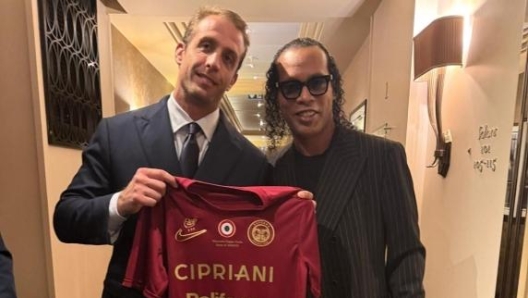
But very few people grow up, spend twenty-four years on another continent, buy the football club of their hometown and then, in their forties, get the chance to sit across from their childhood idol as his friend and business partner.
That is the moment football returns to its oldest form. Before the industry. Before content strategies. Before global partnership packages. Before the word engagement. Football as memory.
FRIENDSHIP AS INFRASTRUCTURE
We have grown accustomed to looking at modern football through transactions. Who bought whom. How much did they pay. What is the salary. How long is the contract.
Within that framework, friendship can seem almost suspicious, something too imprecise to be taken seriously as a category. And yet friendship is one of the reasons Ronaldinho arrived in Ravenna.
At his presentation, the Brazilian spoke about the relationship he had built over the years with Cipriani, his family and his friends. Cipriani, meanwhile, makes no attempt to hide the fact that Ronaldinho was never simply a big name that could be put on a poster.

First, he was an idol. Then, a friend. Now, a partner. Ronaldinho has entered the club's ownership story, while his role on the pitch remains part of the fascinating uncertainty surrounding the entire project.
Cipriani did not simply buy Ronaldinho's name. He brought in a man he knows well enough to try and turn a personal story into a public project. And stories, unlike transfers, can outlast the final whistle.
RONALDINHO AS THE THIRD PART OF THE EQUATION
And this may be where we see most clearly what Cipriani is trying to build. Braida represents football's past. Black Duck represents football's future. Ronaldinho represents something else entirely. He represents the reason we started watching football in the first place.
That is why the question of whether he will actually play may not even be the most important one.
At 46, more than a decade after his last professional appearance, Ronaldinho arrived in Italy as an investor and a potential player. He has not confirmed how much, if at all, he will play again, leaving that decision to the club and the coach. Cipriani, meanwhile, has spoken of his hope that Ronaldinho might score one more symbolic goal.
But Ronaldinho does not need minutes in Ravenna. He needs possibility. The possibility contained in one sentence we can all imagine: Ronaldinho is back.
It does not even matter what would happen after that. Maybe he would play ten minutes, and maybe halftime. Maybe he would come on late, smile, produce a move that should no longer be possible for a 46-year-old man, and then convince us all that we had been wrong.
And maybe he would miss his shot. Which would, in fact, be perfect. Because Ronaldinho was never just statistics. He was the possibility that something unexpected might happen. And that is precisely the possibility Ravenna is trying to sell.
FROM RAVENNA TO MIAMI AND BACK
There is something almost symbolic in the fact that Ronaldinho's arrival was presented in Miami. Not simply because Cipriani spent a large part of his life there.
Cipriani Miami, where football, luxury, Italian culture and global spectacle converged around a Serie C club, is almost a perfect reflection of what Ravenna is trying to become. At the dinner and events surrounding Ronaldinho's presentation, the club was not simply introducing a new player. It was introducing itself to an international audience.
Officially, the project positions itself at the intersection of football, culture, creativity and contemporary Italian identity.

There is something almost ironic about every return: a man can only truly return home after he has spent long enough living somewhere else. Because a return is never a return to the same place. The city is not the same. Neither is the man. The Ravenna Cipriani left behind is not the Ravenna he returned to. And the boy who watched Ronaldinho is not the man who now shares a football ownership project with him.That is why the entire project should not be seen as an attempt by one man to return to the beginning.
MORE THAN A RESULT
Cipriani speaks about big ambitions. About taking Ravenna back to bigger stages. Such statements in Serie C always sound a little like a toast made late at night: by morning they may seem exaggerated, but in the moment they are spoken, everyone wants to believe they might be possible.
But perhaps sporting results, at least for now, are not the only measure of success. Ronaldinho has already done what he was really supposed to do. He has made the world say Ravenna's name. Suddenly, people are talking about the city far beyond Italy. Suddenly, Serie C is not just Serie C. Suddenly, a small club has become a cultural event.
Some will, of course, say that it is all marketing.
And they will be right.
But we use the word marketing too often as an accusation, as if every successful idea automatically becomes less real simply because someone knew how to present it.
Perhaps the bigger question is this:
If Ronaldinho really does bring thousands of new people towards Ravenna, if the city starts talking about its club again, if children ask for his shirt for the first time, if the stadium becomes a place where something happens that goes beyond ninety minutes, does it really matter how it all began?
Because every great football project is, before anything else, a well-told story. But Cipriani is clearly trying to do something even harder.
To turn the story into a system.
Braida for knowledge. Black Duck for the future. Ronaldinho for imagination. And Ravenna for the reason.

