
Atlético Dallas
Building a Football Club Before the First Kick

A football club that has not played a single competitive match can already have a supporters' group, season-ticket founders, chants, tifos, a supporters' bar, a podcast, a museum exhibit and one of Mexico's most recognizable footballers.
Atlético Dallas has all of them.

The club was announced in November 2024 and will play its first competitive season in 2027. Before a ball has been kicked, its supporters have already made a tifo that was exhibited at the Fort Worth Museum of Science and History. Its official supporters' group, Lunáticos Azules, was formed in January 2025, before Atlético Dallas even had a name, colors or a manager.
There is something distinctly American about that.
In most football cultures, history comes first. The club plays, generations follow, rivalries develop, symbols acquire meaning and supporters inherit traditions.
In Dallas, the order can be reversed. First comes the vision. Then the investment. Then the identity. Then the supporters. And eventually, the football.
Atlético Dallas is an interesting subject in building a football club from the outside in, and perhaps one of the clearest examples yet of how American “soccer” is trying to manufacture something that European football normally spends decades accumulating.
O4 BRIEF
HOW DID ATLÉTICO DALLAS START?
Atlético Dallas began with two lifelong friends, Matt Valentine and Sam Morton, who met as children on a soccer field in Dallas. After an unsuccessful attempt to buy and relocate Las Vegas Lights FC, they decided to build a new USL Championship club from scratch, with USL Dallas officially announced on November 19, 2024, ahead of its 2027 debut.
WHAT DOES IT TAKE TO BUILD A CLUB FROM SCRATCH?
The exact expansion fee paid by Atlético Dallas has not been disclosed, but the USL's publicly documented Championship expansion benchmark was $20 million, with a 2023 FDD estimating total initial investment of roughly $24–29.5 million. The club will play at the Cotton Bowl, while its planned $70.87 million Garland training and soccer complex was later terminated, showing how building an American soccer club can extend far beyond the team itself.
HOW DO YOU CREATE HISTORY BEFORE YOU HAVE ANY?
Atlético Dallas started building its culture before playing a match: Lunáticos Azules formed in early 2025, the 1841 Founders Club turned early supporters into “founders,” and Chicharito became the first player in club history. Its wolf-and-rattlesnake crest, created by ModestWorks and Moniker with heraldic artist Tom Meek, then gave a brand-new club a visual language rooted in Texas, Mexican and European heraldic traditions.
SOURCES
PART I
FROM AN IDEA TO THE SECOND DIVISION
The story begins long before Atlético Dallas had a name. Matt Valentine and Sam Morton met as children on a “soccer” field in the Dallas area. Almost four decades later, the two lifelong friends found themselves trying to turn the game they grew up playing into a professional sports business of their own.
The two men brought complementary backgrounds.
Valentine had spent more than 25 years in corporate finance, capital markets and investment strategy. Morton came from the radio and commercial side of the entertainment business, eventually taking responsibility for marketing, communications, sponsorships, merchandising and ticketing.
It was not simply a case of two football romantics deciding to start a team. There was a business opportunity underneath the idea.
The first idea was not to create Atlético Dallas
Valentine first seriously encountered the possibility of USL ownership in 2023, during a college recruiting visit with his son Reid, who had played in the Dallas area and later moved into the USL system. The first target was not an expansion franchise at all.
Valentine and his group explored buying Las Vegas Lights FC, an existing USL Championship club, with the intention of relocating it to Dallas. The USL rejected the relocation.
But instead of ending the project, the rejection changed its shape. The league was willing to consider Dallas as an expansion market. So the group stopped trying to move somebody else's club and started trying to build its own.
That distinction is fundamental. Atlético Dallas was not promoted into professional football. It was not purchased as a historic club. There was no hundred-year-old badge waiting to be modernized. There was no stadium inherited from previous generations. There was simply a market, a league, a group of investors and a belief that Dallas could support another professional football club.
As Valentine later put it, the appeal was precisely the opportunity to create everything from scratch.
November 19, 2024: the club becomes real
On November 19, 2024, the United Soccer League and the City of Garland announced that USL Dallas would join the USL Championship for the 2027 season. The ownership group was led by Valentine and Morton, alongside Luther Ott and Dan McAlone. At that moment, however, there was still no Atlético Dallas.
There was no crest. No colors. No Chicharito. No Peter Luccin. No Lunáticos Azules.
Just USL Dallas and the promise that professional men's football was coming to North Texas.
The club would eventually add sports entrepreneur Terrence Murphy and former United States men's national team player Kyle Martino to its ownership circle. The timeline itself is revealing. The club was announced in November 2024. Its first competitive season is scheduled for 2027.
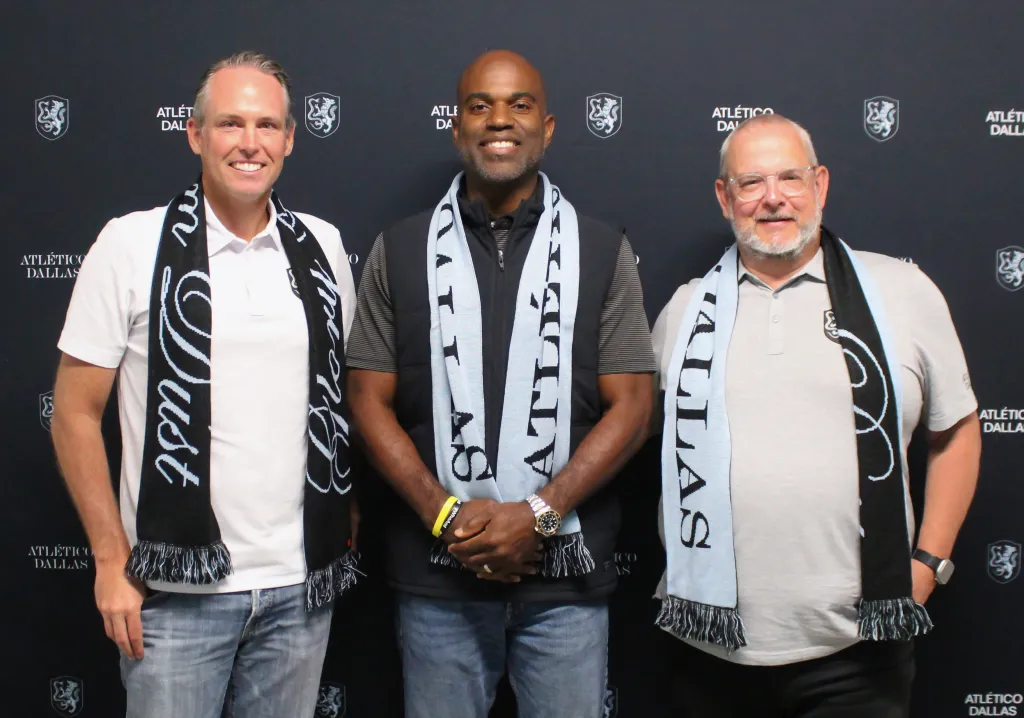
That is roughly two years, in American sports terms, an unusually long period in which a franchise can exist publicly before playing its first match. But Atlético Dallas used those two years deliberately. They were not waiting for football to begin. They were building the football club.
So how much does it cost to buy your way into the USL?
This is where the Atlético Dallas story becomes particularly interesting. The exact expansion fee paid by Atlético Dallas has not been publicly disclosed. But the USL has publicly discussed the economics of entering the Championship. In 2023, USL COO Justin Papadakis said the expansion fee for a USL Championship club was $20 million. A 2023 USL Championship Franchise Disclosure Document likewise listed an initial franchise fee of $20 million and estimated total initial investment of roughly $24 million to $29.5 million, depending on the model.

That does not mean Atlético Dallas wrote a $20 million cheque and bought a team. It means that $20 million is the best publicly documented benchmark for the league's expansion price at the time, while the actual terms of the Dallas deal remain private.
And the franchise fee is only the beginning. A professional football club requires players, coaches, front-office staff, medical personnel, travel, insurance, marketing, ticketing, facilities, stadium operations, academy programs and, increasingly in American “soccer”, real-estate infrastructure.
The public FDD estimated total initial investment substantially above the franchise fee itself. In other words, Atlético Dallas is not simply a $20 million ticket into a league. It is a multimillion-dollar attempt to build an entire sports ecosystem around that ticket.
The stadium tells the same story
Atlético Dallas will play its home matches at the Cotton Bowl, the historic stadium inside Fair Park. But it does not own the stadium.

The City of Dallas approved a three-year license agreement covering the 2027, 2028 and 2029 seasons, with two additional one-year renewal options. The agreement allows Atlético Dallas to use the Cotton Bowl for up to 24 matches per season.
The economics are unusual, althought very American.
The city receives a $12,500 use fee per game, retains 100% of parking revenue, and receives additional per-ticket payments once attendance passes certain thresholds. Atlético Dallas retains its own gameday sponsorship revenue and receives a share of certain other commercial income.
The club also has a three-year lease arrangement for the MoneyGram Soccer Park Complex, with options for two additional years, for training and other football activities.
So the club's first home is not a privately owned football cathedral. It is a historic municipal stadium.
That matters because Atlético Dallas is trying to do something different from the classic American sports expansion model of building a new arena and then building the franchise around it. Instead, the club is trying to activate existing infrastructure while developing a broader football ecosystem around it.
The Garland chapter
That ecosystem almost became much larger.
In 2025, Garland approved plans for a $70.87 million “soccer” complex that would have included Atlético Dallas' training facility, multiple training fields, a 2,000-seat show pitch, a 28,000-square-foot multipurpose building, futsal courts and public amenities. The project was supposed to become one of the physical foundations of the club.
But in September 2025, Garland terminated negotiations. The city said the proposed structure did not provide a sufficient return on its $70.87 million investment. Atlético Dallas said it was disappointed and began evaluating alternative sites.

That episode is important because it shows what building a club in America actually means. The football team is only one piece. There are cities, public land, infrastructure, youth academies, training centers, mixed-use developments, commercial partnerships and real-estate expectations surrounding it.
The club is simultaneously a sporting project and a development project.
And then there are the fans
This might be the strangest part of the story. Atlético Dallas had not played a competitive match. It barely existed as a football institution.
And yet on January 30, 2025, supporters gathered at the club's first fan forum in Garland. One of them, Drew Gehrts, asked the front office a simple question:
Was there already a supporters' group?
There wasn't. So he started one. Before leaving the event, Gehrts collected contact information and created a Discord server. That became the beginning of Lunáticos Azules, the club's official supporters' group.
The club name came later. The group chose Spanish deliberately, reflecting Dallas' deep Hispanic and Latino cultural identity. And something that would normally take years began almost immediately.
Meetups. Banners. Chants. Tifos. A community.

By 2026, a handmade Lunáticos Azules tifo had been selected for the American Tifo exhibition at the Fort Worth Museum of Science and History, alongside work from established supporter communities including FC Dallas and Austin FC.
The supporters had created a piece of football culture before the club had played its first professional match. That is almost the perfect metaphor for Atlético Dallas. The culture arrived before the football.
The club even created a Founders Club
Atlético Dallas has formalized this phenomenon commercially through its 1841 Founders Club. The first 1,841 account holders receive recognition as founding members and access to club benefits and experiences. Why number 1841? Dallas was founded in 1841, when John Neely Bryan established a settlement on the banks of the Trinity River.

Again, the symbolism is important. The club is not asking people to become supporters because they have watched Atlético win. There is nothing to win yet.
It is asking them to become supporters because they believe in what the club might become. That is a very different emotional transaction, and it is one American sports franchises understand extremely well. You can sell the future.
Then came Chicharito
Before Atlético Dallas had played a single competitive match, it had another thing most new clubs spend decades trying to acquire: a recognizable star.

In 2026, the club signed Javier “Chicharito” Hernández as the first player in its history. The agreement was for two years, with a club option for a third season. The story of the signing is almost absurdly small compared with the size of the name.
It began with a text message. A connection between people around the club and Hernández eventually led to meetings, dinners and conversations about what Atlético Dallas was trying to build. Hernández ultimately saw a project rather than simply a final destination for his career. Atlético saw an experienced footballer capable of setting a standard for a team that did not yet have one.
It is another example of the club's unusual chronology. Normally, a club earns its history and eventually attracts famous players.
The American contradiction
This is what makes Atlético Dallas worth watching. It is simultaneously very American and strangely European.
The American side is obvious. A franchise is awarded. Investors assemble the capital. A market is identified. A stadium agreement is negotiated. Branding is unveiled. Season-ticket deposits are sold. A supporters' community is cultivated. A star is signed. The club is built before the first match.
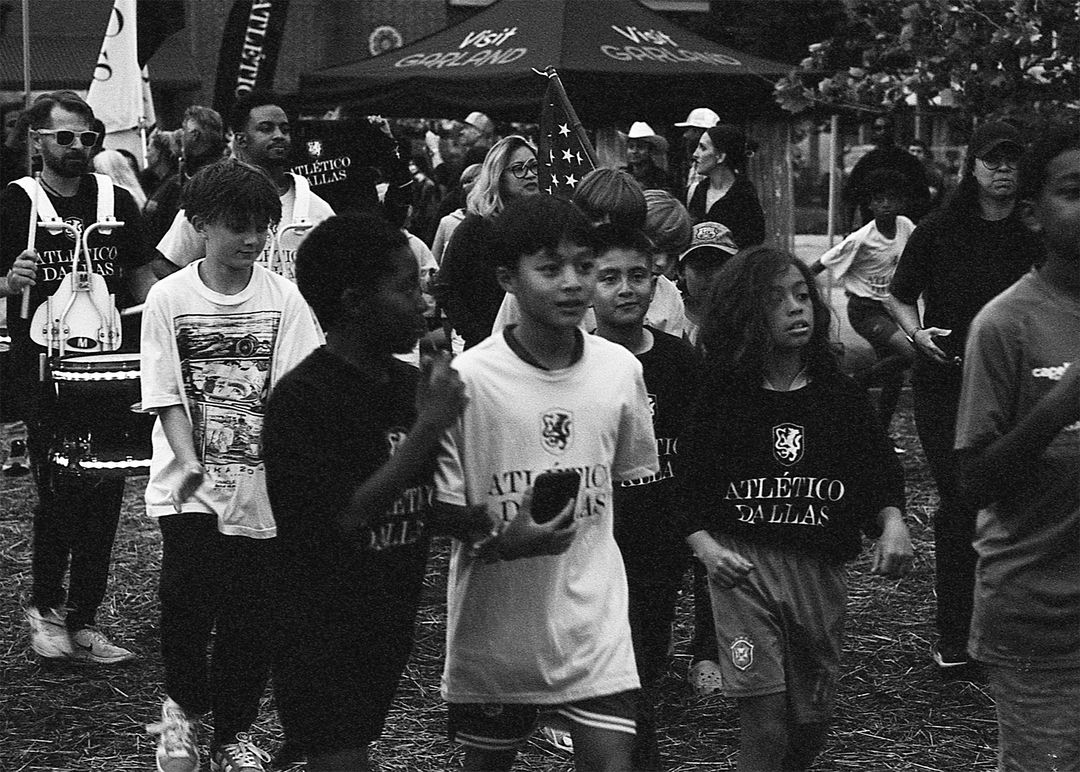
But then there is the European side. A crest based on heraldry. A Spanish name. An organized supporters' group. Tifos. Chants. A terrace culture.
Atlético Dallas is therefore not simply another expansion franchise. It is a snapshot of American football trying to answer a very old football question:
How do you create belonging? The founders cannot give Atlético Dallas 100 years of history. They cannot give it legendary matches or generations of inherited rivalries.
So they are trying something else. They are giving people a reason to believe early. And perhaps that is the most American part of all. The club does not have history yet, it has expectation. And in Dallas, that may be enough to get the story started.
___________________________________________________________________________________________________
PART II
THE WOLF, THE SNAKE AND THE ART OF INVENTING HISTORY
If the first part of Atlético Dallas' story is about building a club before it exists on the pitch, the second is about building something even more difficult: a feeling that the club has always existed.

Atlético Dallas announced its existence in 2024. Its official name, crest and colors did not arrive until May 2025. Yet when the identity finally appeared, it did not look like the visual identity of a brand-new American expansion franchise.
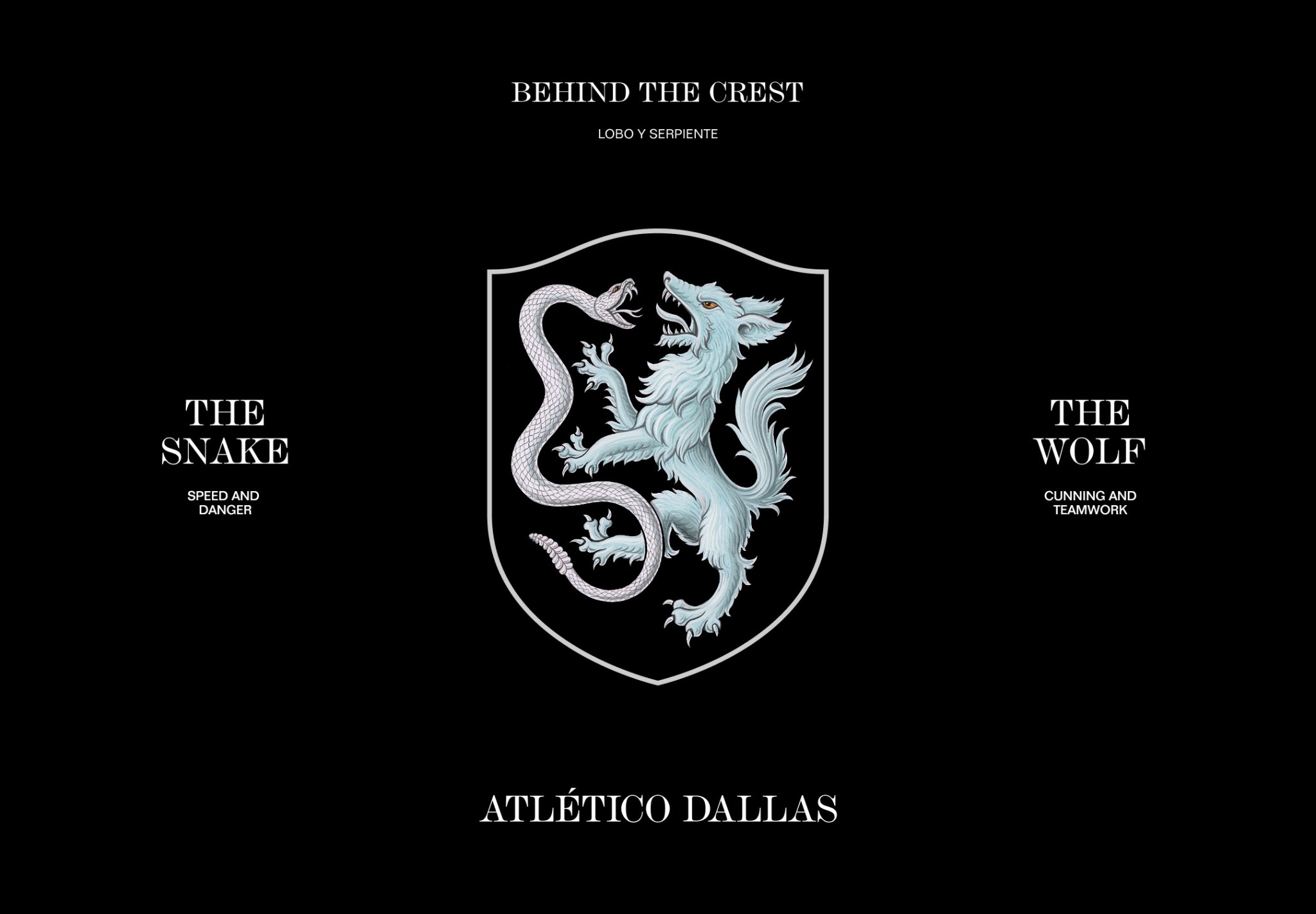
It looked old, but not outdated, old in the best possible sense. Like something discovered rather than designed. At the center was a shield. Inside it: a wolf and a rattlesnake locked in confrontation.
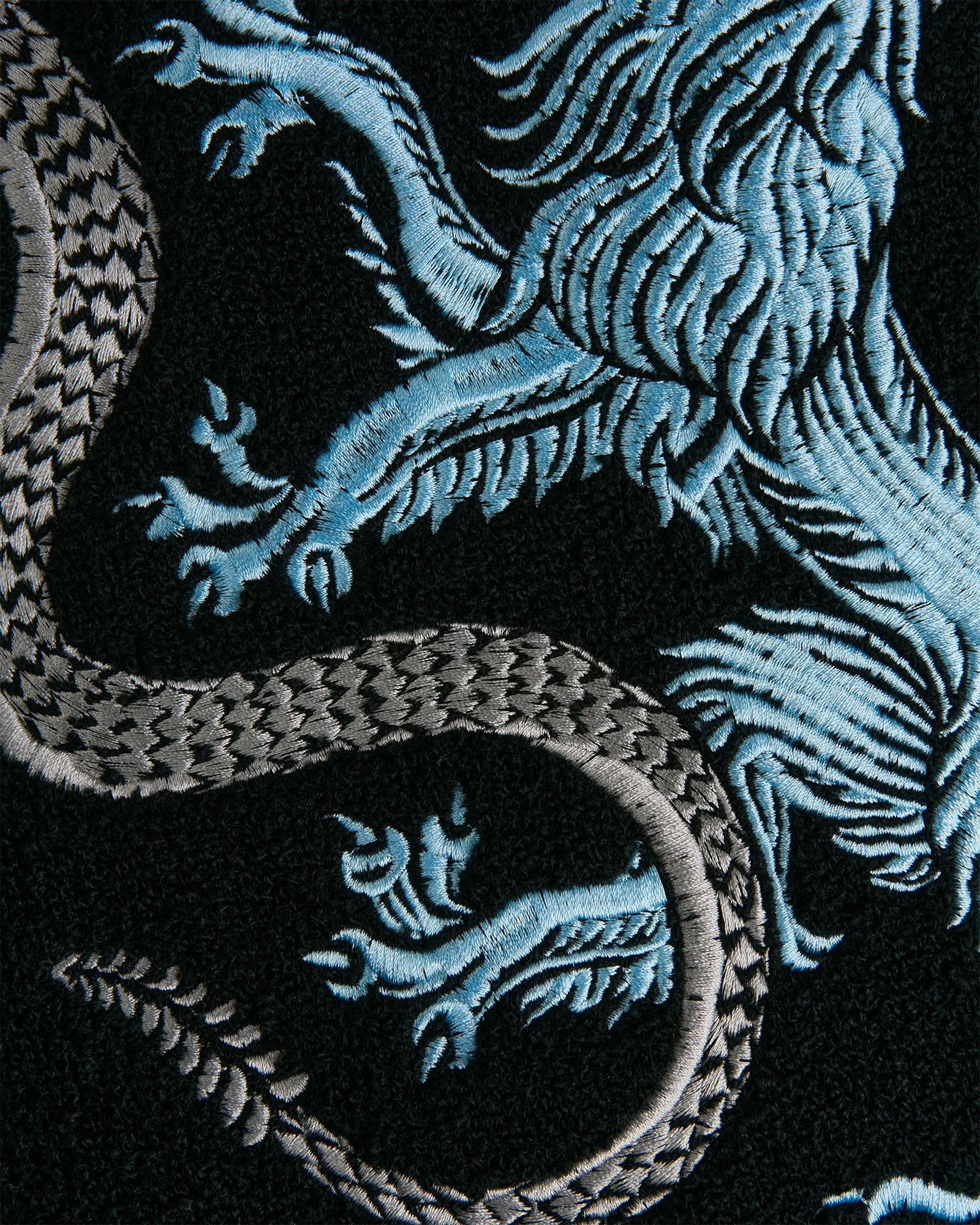
No football. No ball. No star. No Dallas skyline. No cowboy hat. No generic Texas longhorn. Instead, two animals fighting inside a piece of visual language that resembles a centuries-old coat of arms.
For a club without history, that was a remarkably bold choice!
Designing a history that does not exist
The identity was developed by Dallas creative agency ModestWorks, in collaboration with Moniker. The crest itself was created with English heraldic artist Tom Meek, whose work brought a deliberately traditional approach to the project. The club says the process involved countless revisions, sketches and late-night exchanges before arriving at the final artwork. That decision is important.
Modern sports branding has spent years moving in the opposite direction. Badges have become simpler. Details disappear. Shapes become cleaner. Logos are optimized for phone screens, broadcast graphics, social media avatars and merchandise.
Atlético Dallas chose to bring the details back. The result feels almost anti-digital. It wants to be looked at slowly.
Why a wolf?
The creative team began with the history of the land itself. According to ModestWorks, research into the origins of Dallas led them back to the animals that inhabited North Texas before modern settlement. The Mexican gray wolf was identified as the apex predator of the region.
The wolf therefore became more than an animal. It became a symbol of the land before the city.
Atlético's own identity system describes the wolf through ideas of cunning, instinct and teamwork. That last part is particularly appropriate for football. A wolf does not operate only as an individual. It operates as a pack.
And why the snake?
The rattlesnake represents something completely different. Speed. Patience. Precision. Danger. The snake waits. And then it strikes. But the designers found something even more useful during their research.
The relationship between the wolf and the rattlesnake is not simply predator versus prey. A wolf can kill and eat a snake. But a rattlesnake can also kill a wolf. That became the conceptual heart of the identity.
The wolf is the bigger predator. The snake is the underdog. And the underdog can still win. For an expansion team entering the USL Championship, the metaphor was almost too perfect to ignore. Atlético Dallas is the new animal entering an established ecosystem. It does not need to be the biggest. It needs to be dangerous.
The crest was not designed to look modern
This is perhaps the most interesting part of the entire identity. ModestWorks says the crest deliberately draws from the centuries-old tradition of European and Mexican heraldry. That is why it feels so different from the majority of contemporary American sports logos.
The artwork was created with traditional techniques and a human hand rather than being reduced to a perfectly geometric digital mark. There was even an earlier version in which the snake wrapped itself around the wolf.
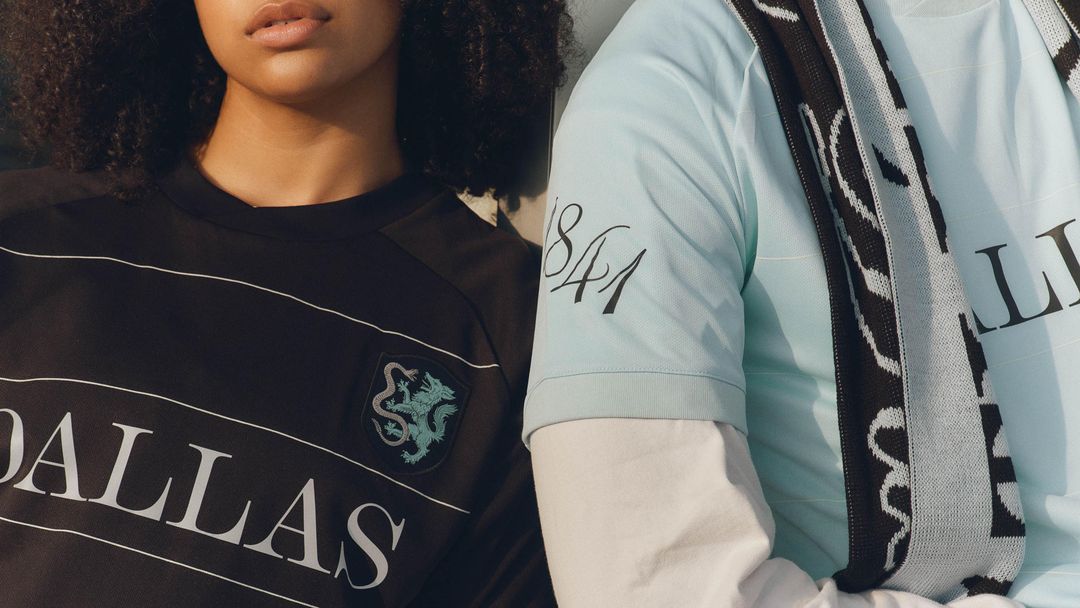
The final design simplified the relationship, placing the two animals face-to-face. The original drawings and hand-painted artwork were preserved as part of the club's history. That creates another fascinating contradiction. Atlético Dallas is a new club. But its first piece of "history" is literally a one-of-one piece of artwork.
The colors have a geography too
The visual identity does not stop with the crest. Its palette is built around names that sound more like pieces of Texas history than colors from a brand guideline.
Texas Topaz was inspired by the state gemstone. Blackland Crude was referencing the Blackland Prairie and Texas' oil legacy. Silver Ore was connecting the identity to the mineral wealth and natural landscape of Texas.
The result is a palette that attempts to make the club feel geographically specific rather than generically Texan. That distinction matters. There are thousands of sports teams that can use black, blue, red or gold. There are far fewer that can explain exactly why their black is called Blackland Crude.

A CLUB BEFORE THE FIRST KICK
Atlético Dallas has achieved something remarkable before playing a single competitive minute. In little more than a year, its founders, designers and supporters have built the foundations of a club with a clear identity, a growing community and ambitions that reach far beyond the pitch.
To everyone involved in building Atlético Dallas: congratulations.

The first kick is still ahead. But if the club continues to build with the same ambition, patience and attention to detail, there is every reason to believe that Atlético Dallas can become a very successful football club, and, more importantly, a club that Dallas can truly call its own.
PART OF O4 DIGITAL EDITION ISSUE 001
This story is part of O4 Digital Edition Issue 001, a closer look at the business, design and culture shaping football.
DISCOVER THE ISSUE
