
Titans at War and Crumbs from the Table: What the World Cup Jersey Market Tells Us
Almost every major national team is aligned with one of them. This powerful trio effectively dictates trends, pricing, global logistics and marketing narratives in today’s football.

When we think of the FIFA World Cup, our first associations are goals, footballing stars and the euphoria of the fans. Yet behind that romantic backdrop lies one of the most competitive corporate battles of them all: the fight to shape the visual identity of national teams.
Long before the tournament itself begins, football fans around the world eagerly await the unveiling of new national-team kits. Amid news about host cities, stadiums, the draw and the groups, a genuine frenzy takes hold - fuelled by both fake and authentic insider photographs, with various websites and sports accounts on social media presenting unofficial glimpses of what the future kits might look like. In doing so, they heighten public interest in the world’s most important of secondary matters.
Immediately before the World Cup begins, when the biggest sportswear brands release multi-minute video campaigns featuring leading sporting stars in their new kits, alongside their other brand ambassadors, football fever reaches its peak. I believe football fans will agree that such moments possess a special kind of magic, as we count down to the start of the tournament in sweet anticipation. Yet many are unaware that, at the very same time, a major corporate battle is being waged among sportswear manufacturers.
A look at the list of national team sportswear suppliers for this World Cup makes the landscape of the modern football business and sports marketing crystal clear: on one side, a battle between the titans for the largest share of the spoils; on the other, a merciless struggle among the smallest players for the crumbs from the table.
On the other side of the chart sits a group fighting for the remaining crumbs. Here we find nostalgic names once associated with sporting greatness, such as Umbro, Kappa and Reebok, alongside distinctive regional and smaller brands like Kelme - better known in Croatia for its handball equipment, as well as Capelli, Marathon and Jako.
From an entrepreneurial perspective, this fragmentation of the “rest of the world” is a fascinating example of how difficult it is to break into and operate within an industry defined by exceptionally high barriers to entry. For smaller brands, sponsoring even one less prominent national team at the World Cup represents a significant financial risk, but also a unique marketing opportunity to break onto the global stage. I believe this trend will continue in the future, with the biggest players continuing to claim the largest slices of the pie.
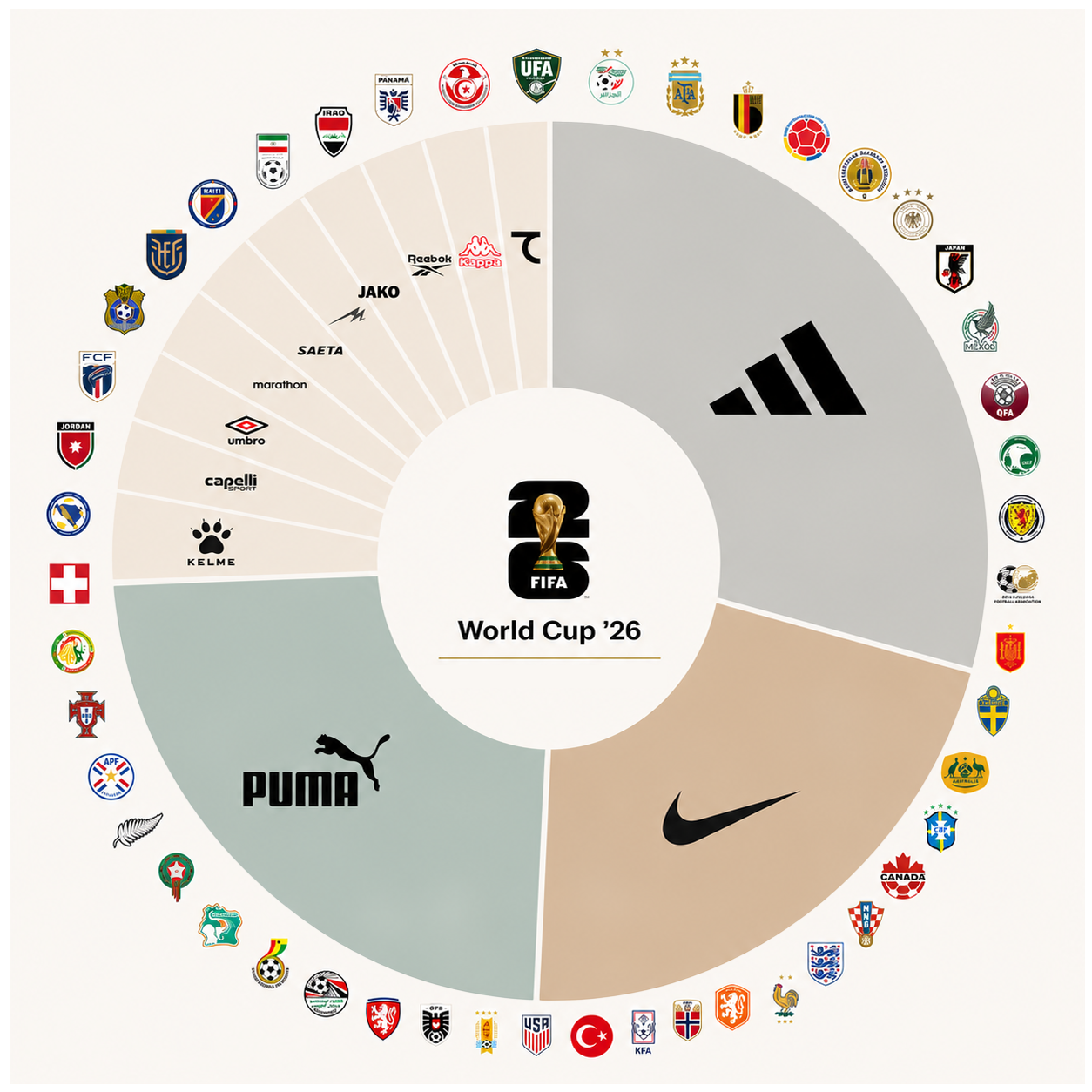
This graphic is about far more than kit statistics.
It is a precise visual representation of the power dynamics within sports marketing. While national teams battle for victories on pitches across North America, the less glamorous but financially more powerful contest in shops around the world—and in jersey sales revenue—has largely already been decided in favour of the biggest names.

