
When a Sponsor Logo Becomes a Discount
A cheaper shirt in exchange for more branding revealed what football fans might actually want from sponsors.

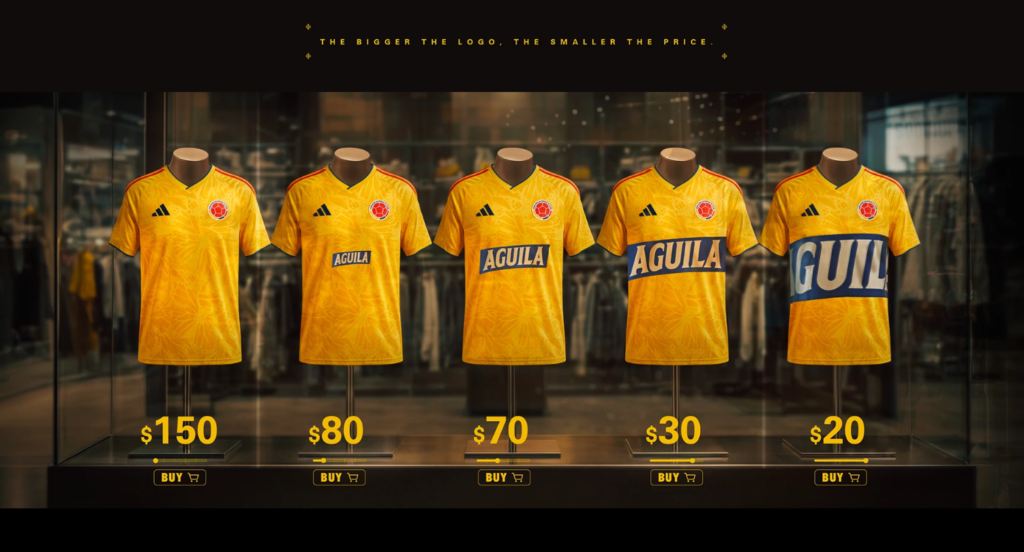
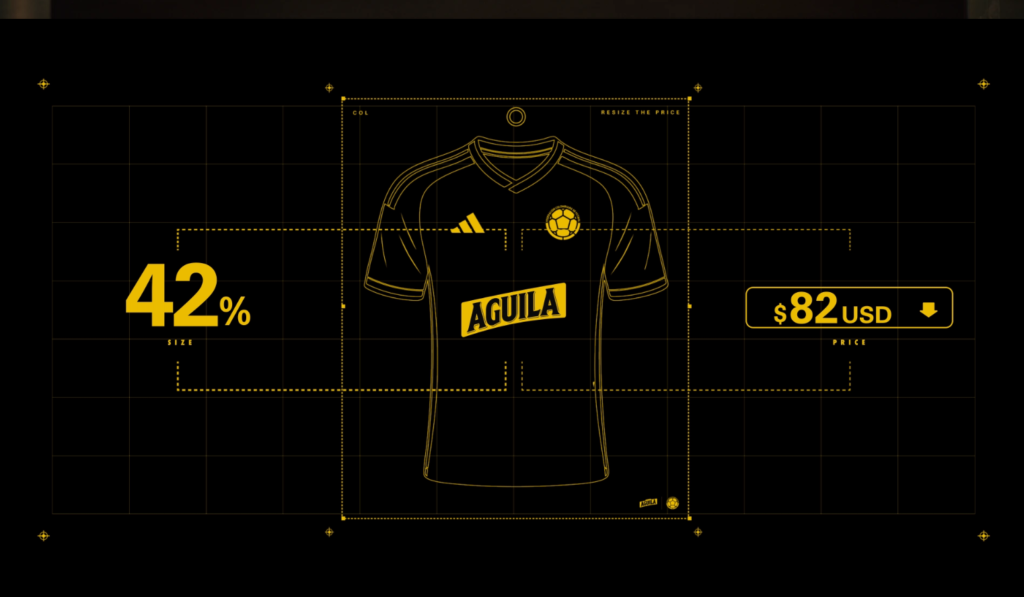
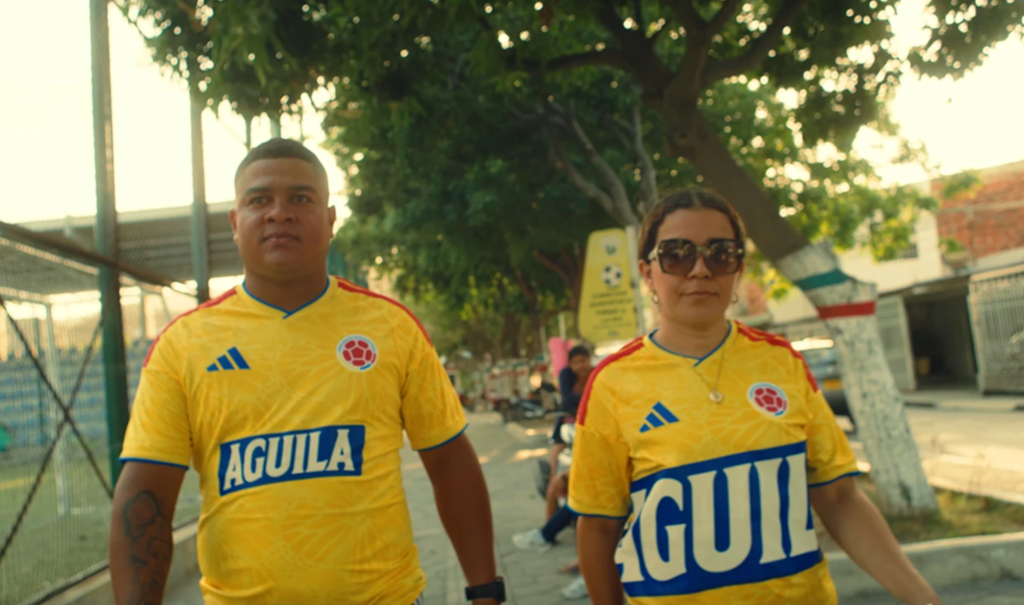
Ahead of the 2026 World Cup, Colombian beer brand and official partner of the Colombia national team, Águila, launched the Resize the Price campaign, built around an unusual exchange. Fans could buy a Colombia jersey featuring the Águila logo on the chest. The bigger the logo, the cheaper the shirt.
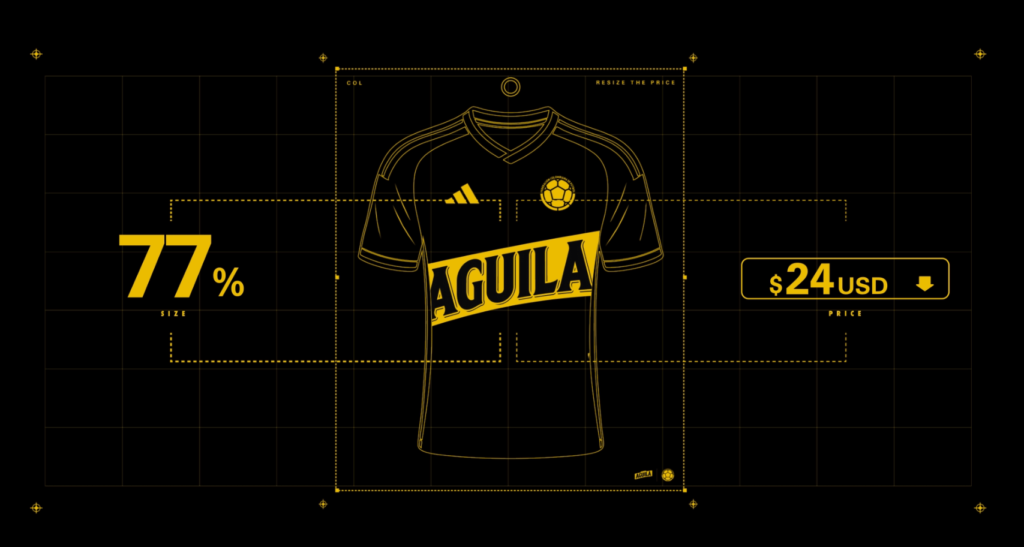
A small logo meant a small discount. A large logo meant a large discount. At the extreme end, a jersey that normally cost around $150 could be purchased for just $20.
The campaign was created by the marketing agency DAVID, through a collaboration between its Bogotá and Madrid offices. Its value was also recognised by the industry, as it won a prestigious award at the Cannes Lions International Festival of Creativity in the Entertainment Lions for Sport category.
The results were striking. When given the choice, most fans did not opt for subtle branding. They chose the biggest logo possible. And that is precisely what makes this campaign more interesting than just another creative marketing stunt.
As for the campaign details, the sale lasted for two hours. There were four different logo sizes to choose from. A total of 10,254 purchases were registered. More than 93% chose the largest logo and therefore the cheapest $20 jersey, representing an 87% discount.
Águila had, in effect, put a price on one of football culture's most common desires. A cleaner shirt was available, but it simply cost more. The question was no longer whether fans liked sponsor logos. Of course, many do not. The question became far more specific: How much do they actually dislike them? Is a small, discreet logo worth an extra $70? Or an extra $100? Or even $130?
Football fans often talk about commercialisation as if it exists separately from the economics of fandom itself. We criticise sponsors on shirts while simultaneously paying increasingly higher prices for those same shirts. We want football to preserve its visual identity, yet preserving it can sometimes come at a very tangible cost.
Águila made that contradiction impossible to ignore. Suddenly, the absence of advertising was no longer simply an aesthetic preference, it became a luxury. And the results suggested that, for many fans, affordability mattered more. Perhaps the large logo was never the real problem. And that may be where we arrive at the most uncomfortable conclusion.
For years, there has been an assumption that brands want the biggest possible logos while fans want the smallest. Their interests appear completely opposed. The sponsor buys visibility; the fan tolerates it. Resize the Price challenged that entire equation. What if the visibility a sponsor wants becomes something the fan is actually willing to embrace?
Not because anyone suddenly fell in love with a giant beer logo, but because that logo delivers tangible value. Águila did not ask fans to accept more advertising for nothing. It offered them a deal: Give us more space, and we'll give you more money back. That completely changes the relationship.
A fan wearing the $20 version is still advertising Águila. In fact, because of the larger logo, that fan is considerably more valuable to the brand as a walking media space. But it would be wrong to call this free advertising, because the fan received something in return.
A difference of $130 is not symbolic. For many people, it can be precisely the difference between being able to buy an official jersey and not being able to afford one at all. The campaign therefore turned sponsorship into a transaction rather than an imposition. The brand wanted visibility, and the fan wanted access. Both sides had something the other wanted.
This is where the campaign becomes particularly interesting from a broader football perspective. The traditional sponsorship model is largely familiar. A brand pays a club, league or federation. Football, in return, gives the brand access to its audience. Fans sit at the end of that chain. They watch the ads, buy the products and, through their behaviour, become part of the visibility the sponsor has purchased. But they rarely receive anything directly from the commercial relationship built around them. With this campaign, Águila changed the direction in which that value flowed.
Instead of using its sponsorship purely as a way to buy attention, it used part of its commercial power to lower the price of something fans actually wanted. The brand, of course, still benefited because this was not an act of charity. Águila gained visibility, attention and thousands of jerseys carrying its logo. The campaign succeeded as marketing precisely because the exchange worked for both sides, and that is what makes it more interesting than a conventional sponsorship activation.
Should sponsors expect visibility? Of course they should. But what if they had to earn part of that visibility by giving something back to the people who ultimately give it real value? Through cheaper products, better access, tickets, experiences, benefits - in other words, through tangible value.
There is another reason why this campaign works so well. A national team jersey is not just an ordinary piece of clothing. It is a symbol of patriotism. It represents identity, belonging and national pride. Especially in the build-up to a World Cup, wearing the shirt means, for many people, participating in something bigger than themselves. That is why the price of a jersey is not simply a retail issue.
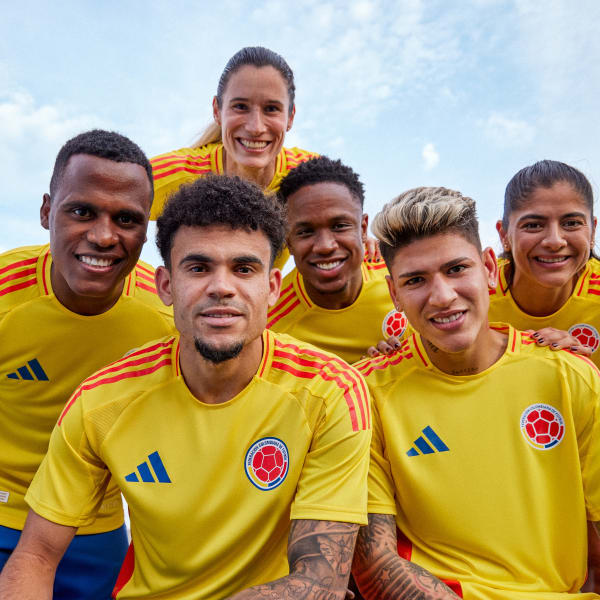
When an official jersey becomes too expensive for a significant part of the population, football creates an uncomfortable contradiction. The national team is supposed to represent everyone, while one of its most visible symbols becomes inaccessible to many of the very people it represents. Águila found a commercial solution to that problem. Not a perfect one, and not an altruistic one, but a real solution that works.
The sponsor essentially said that its logo has value. And instead of allowing all of that value to remain within a conventional sponsorship agreement, fans were given the opportunity to exchange part of their own visual space for a lower price. In doing so, the campaign also opened up another question about football's relationship with authenticity.
We often assume that the most authentic fan experience is also the least commercial one: a clean shirt, free from advertising and anything that interferes with the symbol itself. But authenticity is not experienced through aesthetics alone.For someone who cannot afford a $150 jersey, a giant logo may be a far smaller compromise than being completely excluded from the possibility of wearing their national team's shirt at all.
You can watch promo video of Resize the price campaign here
Modern football is not going to become less commercial. Jerseys will probably continue to become more expensive. Brands will continue to seek attention. Sponsorship will continue to occupy increasingly valuable space within football culture. And when Colombian fans were asked to choose between a cleaner shirt and a cheaper one, they gave their answer. Most chose the logo.
So perhaps the real question was never whether a sponsor belongs on a football shirt. Perhaps it has always been this: What does the sponsor give back in exchange for the space it occupies?

