
You Can Bankrupt a Football Club. Can You Kill It?
Palermo disappeared. Then came back. Again. And again.

There are clubs with history. And then there are clubs with a habit of survival. Palermo belongs to the latter.
Because history, when you look closely enough, is often just the tidy name we give to what others managed to survive. Dates, crests, presidents, promotions and relegations are later arranged into a neat chronology, as if everything had been leading towards some predetermined point. But the real life of a football club is not a chronology. More often, it is an unpaid bill, a bank account suddenly frozen, an office door that has been locked, a letter from the federation, and a city waking up the next morning to a deeply uncomfortable question:
Does our club still exist?
Palermo has had to answer that question more times than any football club should. And every time, in one way or another, it has given the same answer. Yes. Just not always in the same form.
O4 BRIEF
WHAT HAPPENED?
Palermo has repeatedly disappeared from professional football because of financial collapse, bankruptcy and the failure of its legal entity, most dramatically in 1986 and again in 2019. Each time, a new organisation restarted lower down the Italian football pyramid and rebuilt the club around the same colours, city and supporter identity.
WHY DOES IT MATTER?
Palermo shows that the legal existence of a football company and the cultural identity of a football club are not necessarily the same thing. Companies can disappear, crests can change and teams can restart in Serie D, yet supporters and cities can continue to recognise the club as their own.
THE BIGGER QUESTION
If a football club's legal entity can be liquidated while its identity survives, where exactly does a club's continuity live? Palermo's history suggests that it may exist less in corporate documents than in the relationship between a city, its supporters and the idea of the club itself.
SOURCES
Palermo FC: A History Built Through Rebirth
Palermo officially traces its history back to 1900. Football arrived in the city through the strong connections between the local elite and the British, and the first club was called the Anglo-Palermitan Athletic and Football Club. The pink and black colours that would later make the club recognisable across Italy arrived a few years later. But even that early story contains something that would become characteristic of Palermo: its identity was never entirely still.

Names changed. Crests changed. Legal entities disappeared and reappeared. The club entered mergers and emerged from them, moved between divisions, fell and returned. Today, if you look through Palermo's official history, you find a succession of different badges: 1920, 1921, 1929, 1932, 1947, 1987, 1991, 1998, 2000, 2019. It is almost as if even the symbol itself could not remain unchanged while everything around it kept disappearing and starting again.
The first major rupture came in 1927.
Financial problems brought the club down. Palermo disappeared, at least in the sense in which football bureaucracy understands the word disappeared. But a year later came a reorganisation and a merger with Vigor Palermo. The name returned. Football returned. The city had its club again. That new Palermo would eventually climb to Serie B and, in 1932, reach Serie A for the first time.Perhaps that was Palermo's first lesson.
And then it happened again. The 1939–40 season ended in financial trouble. Palermo was forced to stop, before merging with Juventina Palermo and continuing as Palermo-Juventina. Then came the war. The Allied invasion of Sicily. The interruption of football itself. The city, like the rest of Europe, had more serious concerns than its position in the league table. And yet, after everything, Palermo reappeared.
Of course it did. In the history of some clubs, a return is the exception. At Palermo, returning became almost a business model. The club had already been forced to reinvent itself in 1927 and 1940 before another financial collapse arrived in 1986. And this time, perhaps, came the purest form of death. No romantic metaphor. No symbolism. Debt, exclusion and bankruptcy.
Palermo was thrown out of the football system after its financial collapse and effectively disappeared from league football in 1986–87. Historical records of that season use a brutally simple description:
Società radiata.
The club had been erased. This is where it is worth stopping for a moment. What does it actually mean for a football club to die? Legally, the answer is simple. The company goes bankrupt. Its registration is cancelled. Its assets are sold. Its accounts are closed. The stamp no longer has any authority. Case closed.
But football has never been particularly good at accepting finality, and Palermo returned. In 1987, it started again in Serie C2 (4th level league). In its first season back, it won promotion. On paper, this was a new chapter. For the supporters, however, the question was probably much simpler.
Is this Palermo?
Of course it is. Who else would it be? This is the paradox that modern football, obsessed with ownership structures and corporate identities, sometimes struggles to understand. A club is not the same thing as the company that happens to own its name at a particular moment in time.
The company can collapse. The name can be registered again. The crest can change. But if a city recognises itself in what has returned, something has happened that legal documents cannot explain. Continuity without continuity. Or, more simply: the same club, even when technically it is not. Palermo may be one of European football's clearest examples of this strange metaphysics.

Why Did Palermo FC Go Bankrupt in 2019?
Then came 2019. This time, the collapse felt even more absurd. Because the old Palermo did not disappear as some anonymous club at the bottom of the pyramid. In the decades before, it had lived through perhaps the brightest period of its modern history.
Serie A.
Europe.
Cavani.
Pastore.
Dybala.
A Coppa Italia final.
Years in which Palermo had once again become important far beyond Sicily. And then, again, the end. The club failed to satisfy the requirements for a Serie B licence and was excluded from the 2019–20 professional season. In October 2019, the old U.S. Città di Palermo was declared bankrupt. In October 2019, a court in Palermo formally declared the old U.S. Città di Palermo bankrupt, bringing another chapter of the club's corporate history to an end. And once again, the city faced the same question. Not for the first time. Not even for the second or third.
Is Palermo FC the Same Club After Bankruptcy?
The answer was almost unbelievably familiar. A new club. Serie D. Start again. Palermo returned under a new legal structure, initially as SSD Palermo, before reclaiming the name Palermo F.C. in 2020. The new organisation explicitly framed the change as a return to its historical identity. Old values. New glory. The words could have described almost every previous resurrection. And this is where the story becomes more interesting than a simple story about bankruptcy. Because perhaps Palermo is not a club that died four times. Perhaps Palermo is a club that has spent four different moments proving that the death of a legal entity is not necessarily the death of a football identity. Those are not the same thing. They never were.
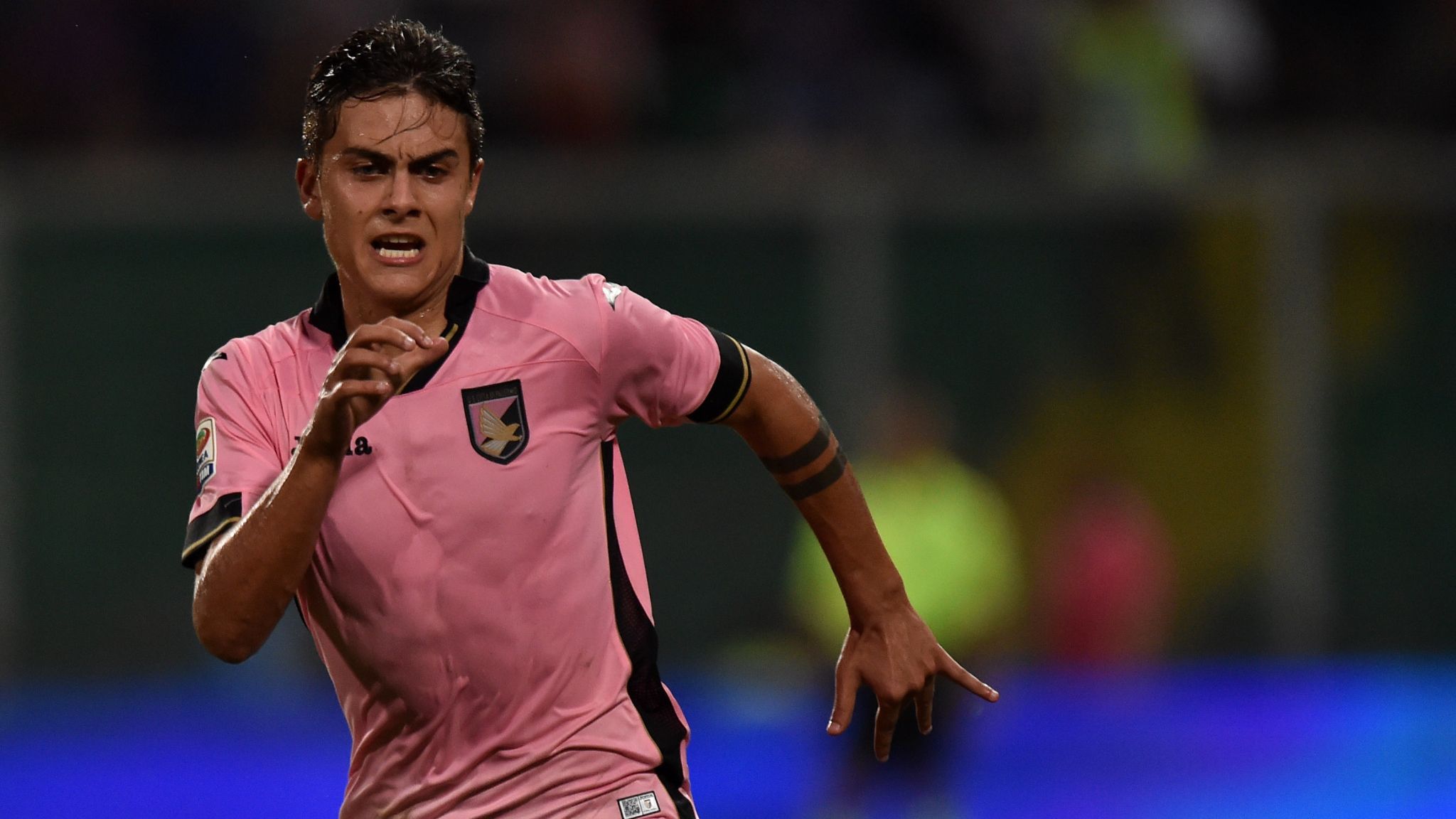
Palermo and City Football Group
Today, Palermo is part of City Football Group. In July 2022, one of the most powerful football networks in the world acquired a majority stake in the club. A global system with nternational expertise and with structure connecting clubs across continents. Since then, Palermo has existed inside the same network whose most famous symbol is Manchester City. The irony is almost perfect. A club that spent decades living on the edge of financial collapse now belongs to one of the most organised and powerful football systems on the planet. From bankruptcy to a global network. From an erased club to part of a portfolio. From Serie D to an organisation that sees football as an international ecosystem.
And perhaps that is why one seemingly small piece of Palermo communication this summer was more revealing than it first appeared. To announce its squad numbers, the club did not create a generic graphic. It created an intercom. A classic brass panel at the entrance of an Italian apartment building.

Established players were given neat, permanent nameplates. New signings appeared on handwritten labels and pieces of tape, like people who had just moved in and had not yet had time to order a proper sign for the door.
The squad as a building. The players as tenants. New people arrive. Old ones remain. Some will move out. Someone will eventually replace the name on the panel. But the building remains. Perhaps that is, accidentally or otherwise, the perfect metaphor for Palermo.
You can liquidate the company, change the crest, merge it with another club and force it to start again from the fourth tier. But one question remains, a question Palermo has been answering for almost a century. Can you actually kill it? So far, the answer is remarkably simple. Not yet.


